Why Data-Driven Decision Making Is the Future of Business Success
Introduction
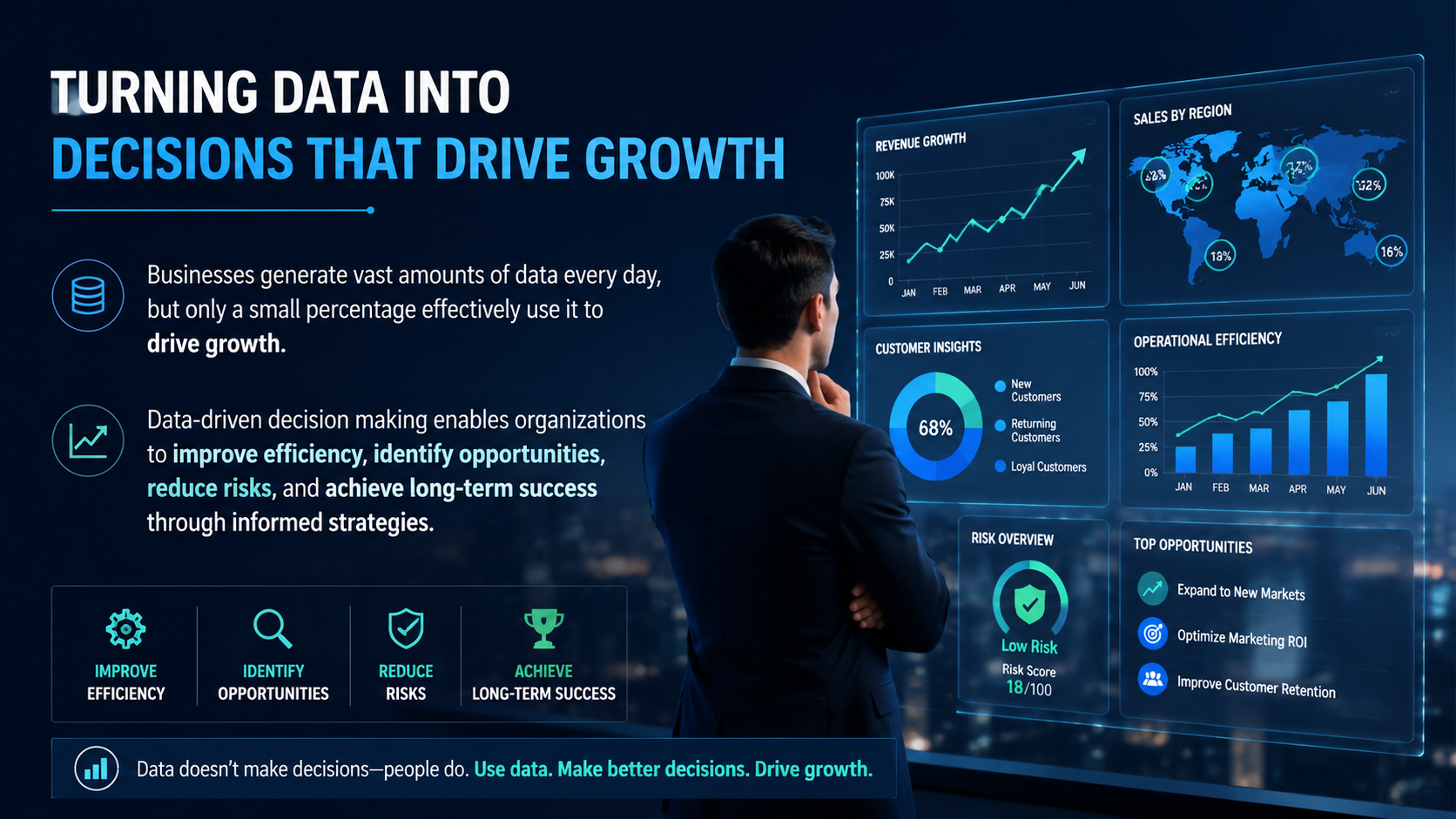
The modern business world is more competitive and fast-paced than ever before. Organizations are constantly searching for ways to improve efficiency, reduce costs, and gain a competitive advantage. While experience and intuition remain valuable, successful businesses increasingly rely on data to guide their decisions. Every interaction, transaction, and business activity generates valuable information that can reveal patterns, trends, and opportunities. Companies that effectively leverage this information are better equipped to make informed decisions, respond to market changes, and achieve sustainable growth.
Understanding Data-Driven Decision Making
Data-driven decision making is the process of using factual information, analytics, and measurable insights to support business decisions. Rather than relying solely on assumptions or personal opinions, organizations use data to evaluate performance, identify challenges, and determine the most effective course of action. This approach improves accuracy and reduces uncertainty in business operations.
Why Data Has Become a Strategic Asset
Data is often described as one of the most valuable resources in modern business. It provides visibility into customer behavior, operational performance, employee productivity, and market trends. Organizations that treat data as a strategic asset can uncover opportunities that might otherwise remain hidden. By understanding what is happening within the business, leaders can make decisions that drive measurable results.
Improving Operational Efficiency
One of the most significant benefits of data-driven decision making is improved operational efficiency. Businesses can analyze workflows, identify bottlenecks, and measure performance across various departments. These insights enable organizations to streamline processes, allocate resources more effectively, and eliminate inefficiencies that impact productivity.
Understanding Customer Behavior
Customers generate valuable data through purchases, inquiries, feedback, and interactions. Analyzing this information helps businesses better understand customer preferences, expectations, and purchasing patterns. These insights support more personalized marketing strategies, improved service delivery, and stronger customer relationships.
Reducing Business Risks
Every business decision carries a degree of risk. Data analytics helps organizations identify potential challenges before they become major problems. By monitoring performance indicators and analyzing historical trends, businesses can make proactive decisions that minimize uncertainty and reduce operational risks.
Supporting Strategic Growth
Growth requires careful planning and informed decision making. Data provides a clear picture of market opportunities, customer demand, and organizational performance. Business leaders can use these insights to develop effective growth strategies, launch new initiatives, and allocate investments more confidently.
Enhancing Employee Performance
Data can also be used to measure and improve employee productivity. Organizations can evaluate performance metrics, identify skill gaps, and optimize workforce management strategies. This leads to improved employee engagement, higher productivity levels, and better overall business performance.
The Role of Technology in Data Analytics
Modern technology makes it easier than ever for businesses to collect, analyze, and interpret data. Advanced analytics platforms, cloud-based solutions, and business intelligence tools provide real-time insights that support faster and more accurate decision making. These technologies enable organizations to transform raw information into actionable knowledge.
Preparing for a Data-Driven Future
As digital transformation continues to accelerate, the importance of data will only increase. Businesses that invest in analytics capabilities today will be better prepared to adapt to changing market conditions and customer expectations. A data-driven culture encourages continuous improvement, innovation, and long-term success.
Conclusion
Data-driven decision making is no longer a competitive advantage reserved for large organizations. It has become an essential business practice for companies of all sizes. By leveraging accurate information and meaningful insights, businesses can improve efficiency, reduce risks, enhance customer experiences, and achieve sustainable growth. Organizations that embrace data as a strategic asset will be better positioned to succeed in an increasingly complex and data-rich business environment.