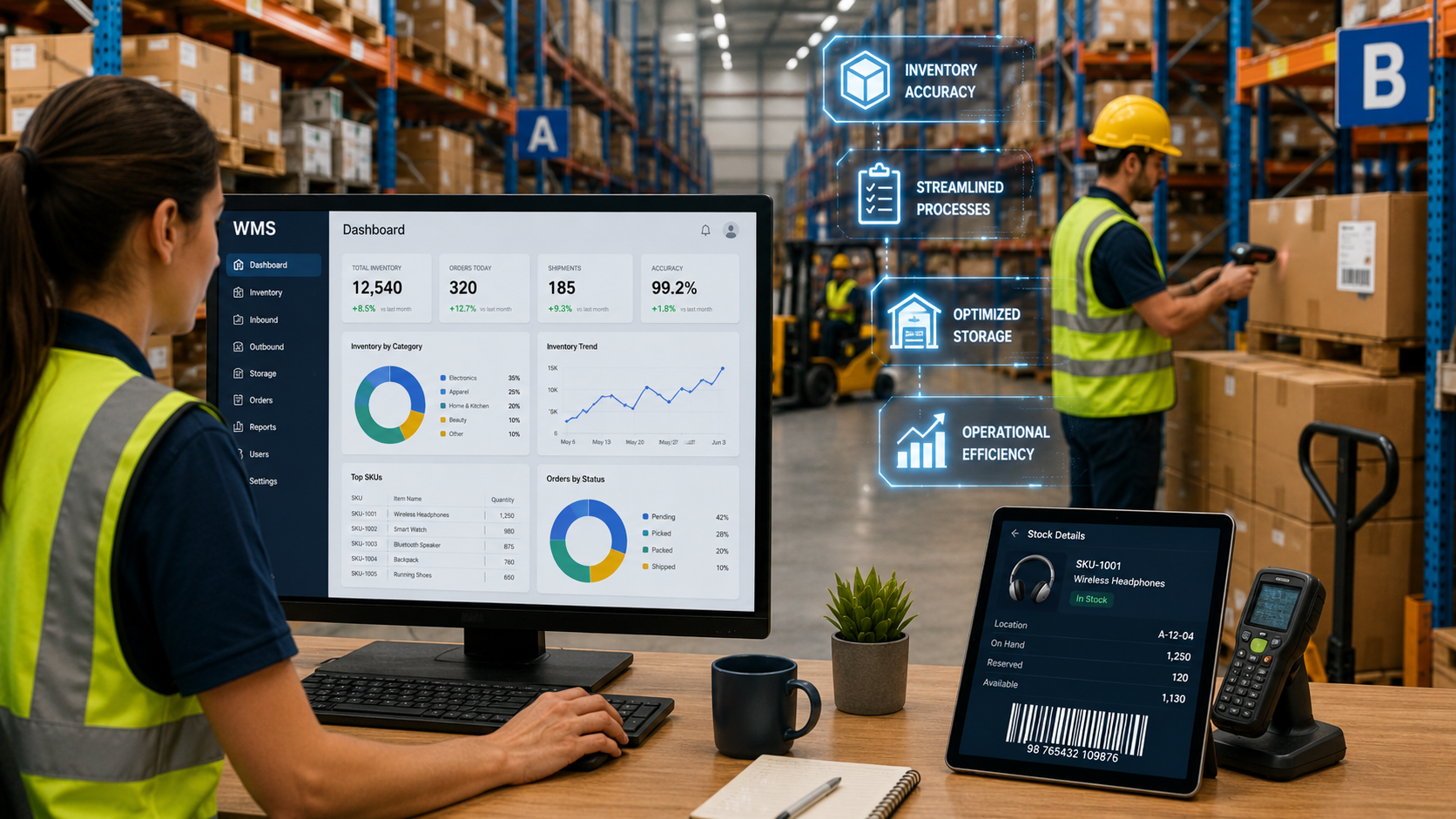
How Warehouse Management Software Improves Accuracy and Operational Efficiency
The Importance of Efficient Warehouse Operations
Warehouses play a critical role in ensuring that products move smoothly from manufacturers to customers. Whether managing raw materials, finished goods, or distribution centers, warehouse operations require careful coordination and real-time visibility. As businesses grow, handling inventory manually becomes increasingly difficult, leading to misplaced products, delayed shipments, inaccurate stock records, and higher operational costs. Warehouse Management Software provides a centralized solution that helps businesses organize warehouse activities efficiently while maintaining complete control over inventory movement. By digitizing warehouse operations, organizations can improve productivity, reduce errors, and ensure faster order fulfillment.
Real-Time Inventory Tracking for Better Control
Maintaining accurate inventory is one of the biggest challenges in warehouse management. Manual tracking methods often result in stock discrepancies that affect purchasing decisions and customer satisfaction. Warehouse Management Software continuously updates inventory levels whenever products are received, moved, picked, packed, or shipped. Managers gain real-time visibility into stock availability across multiple warehouse locations, enabling them to make informed decisions regarding purchasing, replenishment, and distribution. Accurate inventory tracking reduces unnecessary stock shortages while preventing excess inventory that increases storage costs.
Optimizing Warehouse Space Utilization
Efficient use of warehouse space directly impacts operational performance and storage capacity. Poor organization often results in wasted space, longer product retrieval times, and inefficient workflows. Warehouse Management Software helps businesses assign optimal storage locations based on product categories, demand patterns, and warehouse layout. Employees can easily locate products using digital location tracking, reducing travel time within the warehouse and improving picking efficiency. Better space utilization allows businesses to maximize storage capacity without expanding warehouse facilities.
Streamlining Order Fulfillment Processes
Customer satisfaction depends heavily on delivering accurate orders within expected timeframes. Warehouse operations involve receiving orders, picking products, packing shipments, and coordinating dispatch activities. Warehouse Management Software automates these workflows by generating picking lists, verifying product accuracy, and tracking shipment status in real time. Employees receive clear instructions that reduce errors and improve processing speed. Faster and more accurate order fulfillment strengthens customer trust while increasing overall warehouse productivity.
Enhancing Workforce Productivity
Warehouse employees perform numerous daily tasks including receiving shipments, organizing inventory, picking products, packing orders, and conducting stock verification. Manual processes often slow productivity and increase the risk of mistakes. Warehouse Management Software simplifies employee workflows by assigning tasks digitally, tracking work progress, and providing real-time operational guidance. Managers can monitor workforce performance, balance workloads, and identify opportunities for process improvement. A well-organized workforce contributes to higher efficiency and reduced operational delays.
Reducing Operational Costs Through Automation
Automation plays an important role in improving warehouse efficiency. Warehouse Management Software automates inventory updates, barcode scanning, stock transfers, purchase order processing, and reporting functions. These automated processes minimize paperwork, eliminate repetitive manual tasks, and reduce the likelihood of human error. Lower administrative costs, fewer inventory discrepancies, and improved operational efficiency contribute to significant long-term savings while allowing businesses to allocate resources more effectively.
Using Data Analytics for Smarter Business Decisions
Modern warehouse management systems provide detailed reports that help businesses understand inventory performance, order accuracy, warehouse productivity, and product movement trends. Real-time dashboards allow managers to identify slow-moving inventory, monitor storage utilization, evaluate employee performance, and optimize warehouse operations based on reliable data. These insights support strategic planning, improve forecasting accuracy, and help organizations continuously enhance supply chain performance.
Supporting Business Growth with Scalable Solutions
As businesses expand, warehouse operations become more complex with additional products, storage facilities, suppliers, and distribution channels. Warehouse Management Software offers scalable functionality that adapts to changing business requirements without disrupting daily operations. Whether managing a single warehouse or multiple distribution centers, businesses can maintain centralized control while supporting future growth. This flexibility enables organizations to remain competitive in rapidly changing markets while delivering consistent service quality.
Conclusion
Warehouse Management Software has become an essential solution for businesses seeking to improve inventory accuracy, optimize warehouse operations, and enhance supply chain efficiency. By integrating inventory tracking, order fulfillment, workforce management, automation, and reporting into one centralized platform, organizations can reduce operational costs while improving customer satisfaction. Businesses that invest in modern warehouse management technology are better prepared to meet growing customer demands and achieve sustainable long-term success.