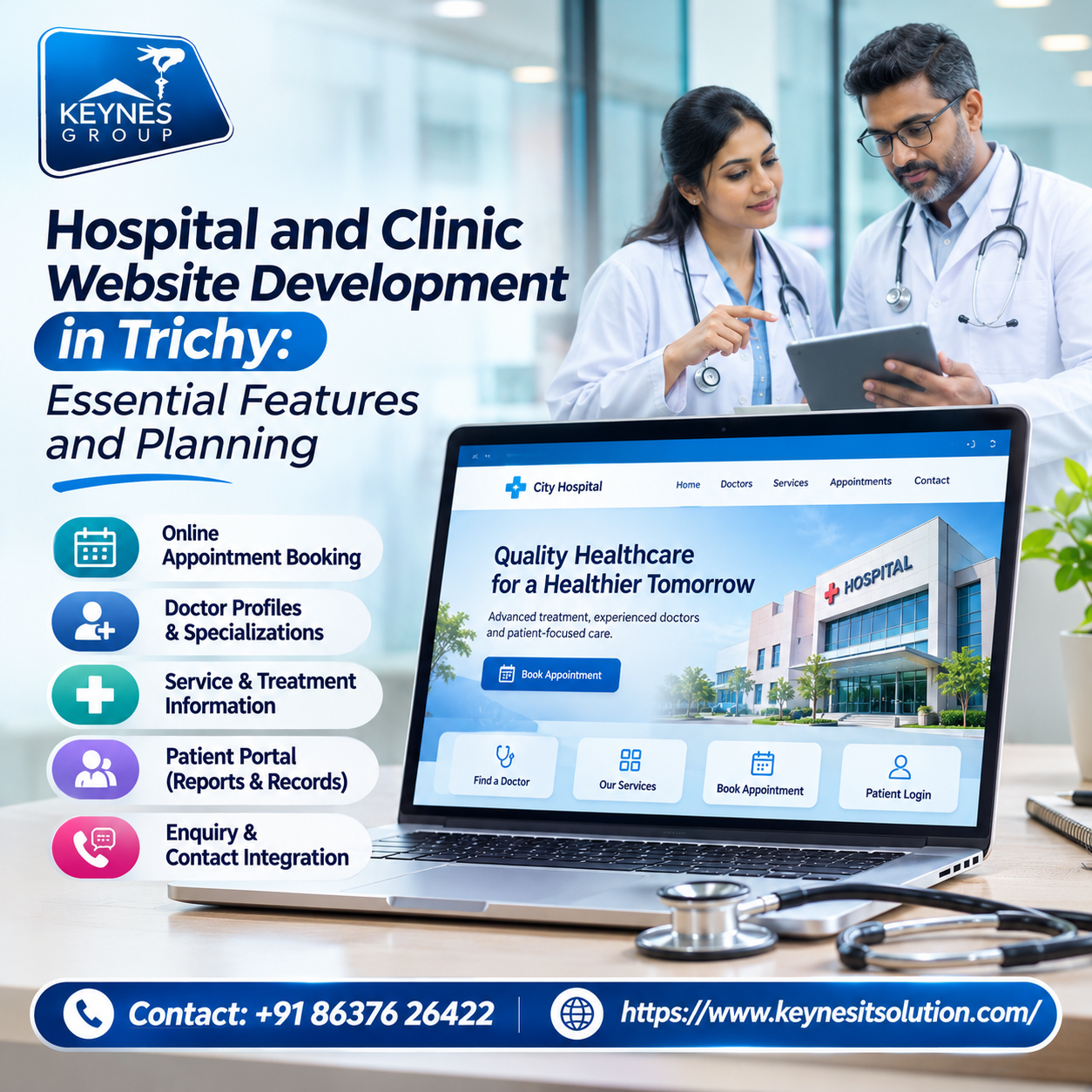
Hospital and Clinic Website Development in Trichy: Essential Features and Planning
Patients and families often visit a healthcare provider's website to check available services, find contact details, understand clinic timings or learn how to request an appointment. For hospitals, clinics and diagnostic centres in Tiruchirappalli, a clear website can make essential information easier to find and reduce confusion before a visit.
A healthcare website should prioritise accuracy, accessibility and trust. It should not make unsupported medical claims or replace professional medical advice. The content and features must be reviewed by the healthcare organisation before publication.
Why a Healthcare Website Matters
A well-organised website can help visitors understand the services offered, identify the correct department, find location and contact information, and learn what to expect when requesting an appointment. It can also provide a central place for verified announcements and administrative information.
1. Present Services and Departments Clearly
Organise services into understandable sections. Use plain language to describe departments, facilities and available services. Avoid confusing medical terminology where a simple explanation is possible. Ensure that each page is reviewed by an authorised representative and updated when services or schedules change.
2. Provide Accurate Doctor and Staff Profiles
If the organisation chooses to publish doctor profiles, confirm names, qualifications, specialities, registration details where appropriate and current availability before publishing. Obtain permission to use photographs and personal biographies. Do not imply that a clinician is available at a location or time unless the organisation has confirmed it.
3. Make Appointment Enquiries Easy
Provide a clear phone number, enquiry form or appointment request process. Explain whether the form is a request rather than a confirmed booking. Collect only the details required to respond, and avoid asking visitors to submit unnecessary medical or sensitive information through a general contact form.
4. Show Location, Timings and Contact Details
Make the verified address, phone number, opening hours and directions easy to locate. If the organisation has multiple branches, give each branch its own accurate details. Keep holiday hours and temporary changes updated. Do not publish a location or service that the organisation does not actually provide.
5. Design for Mobile and Accessibility
Visitors may access the site from a phone while travelling or arranging care for a family member. Use readable text, clear contrast, keyboard-friendly navigation, descriptive link labels and forms that work on smaller screens. Provide meaningful alternative text for informative images and avoid relying on colour alone to communicate important information.
6. Protect Personal Information
Healthcare organisations should consider privacy and security from the beginning of a website project. Use HTTPS, restrict administrator access, keep software updated and review hosting and form providers. If the site collects health-related or other sensitive information, obtain appropriate legal and security advice about the data, consent, retention and access requirements. A basic enquiry form should not be treated as a secure patient-record system.
7. Publish Helpful Patient Information Responsibly
Pages about preparation for appointments, department contact details, visiting procedures and frequently asked administrative questions can be useful. Medical information should be reviewed by qualified professionals, dated where appropriate and kept current. Avoid exaggerated treatment promises, guaranteed outcomes or advice that could be mistaken for an individual diagnosis.
8. Support Search Visibility with Clear Content
Use page titles and headings that accurately describe the hospital, clinic or service. Write unique content for each department and branch where relevant. Add internal links between related pages and ensure that search engines can access the public information intended for indexing. Do not create duplicate location pages that provide no additional value.
9. Plan Maintenance and Content Ownership
Assign responsibility for updating doctor information, timings, contact details, service pages and announcements. Establish a process for reviewing content and removing outdated information. Schedule software updates and backups, and test forms regularly so that appointment enquiries reach the correct team.
Questions to Ask a Healthcare Website Developer
- Can the website be updated by authorised hospital staff?
- How will appointment requests reach the correct department?
- What information is collected through forms and where is it stored?
- How are administrator access, backups and updates managed?
- Will the site work well on mobile devices and assistive technologies?
- What is included in ongoing maintenance and support?
Website Development Support
Healthcare organisations planning a website can review Keynes IT Solutions and its services page. Prepare the approved content, branch details, required enquiry process and privacy requirements before defining the development scope.
Frequently Asked Questions
What should a clinic website include?
Common sections include services, doctor information where verified, location, timings, contact details, appointment enquiry instructions and relevant patient information.
Can patients book appointments through a website?
A website can support appointment requests or a booking system, depending on the organisation's workflow. Clearly explain whether a request is confirmed and how the patient will receive confirmation.
Should a general website form collect medical history?
Usually a general enquiry form should collect only basic contact and enquiry details. Sensitive health information requires a suitable, secure process and an appropriate review of privacy and legal obligations.
How often should healthcare website content be reviewed?
Review content whenever services, staff, schedules or policies change, and establish a regular review cycle for all public information.
Can a healthcare website improve local visibility?
Clear service pages, accurate location details, useful content and a technically sound website can support discoverability. Search visibility is influenced by multiple factors and cannot be guaranteed.
Official Resources
- Ayushman Bharat Digital Mission
- W3C Web Content Accessibility Guidelines
- Google Search Central SEO Starter Guide
Conclusion: A good healthcare website for a Trichy organisation makes accurate information easy to find while treating privacy, accessibility and content review as essential requirements.