The Growing Importance of Cloud-Based Business Solutions
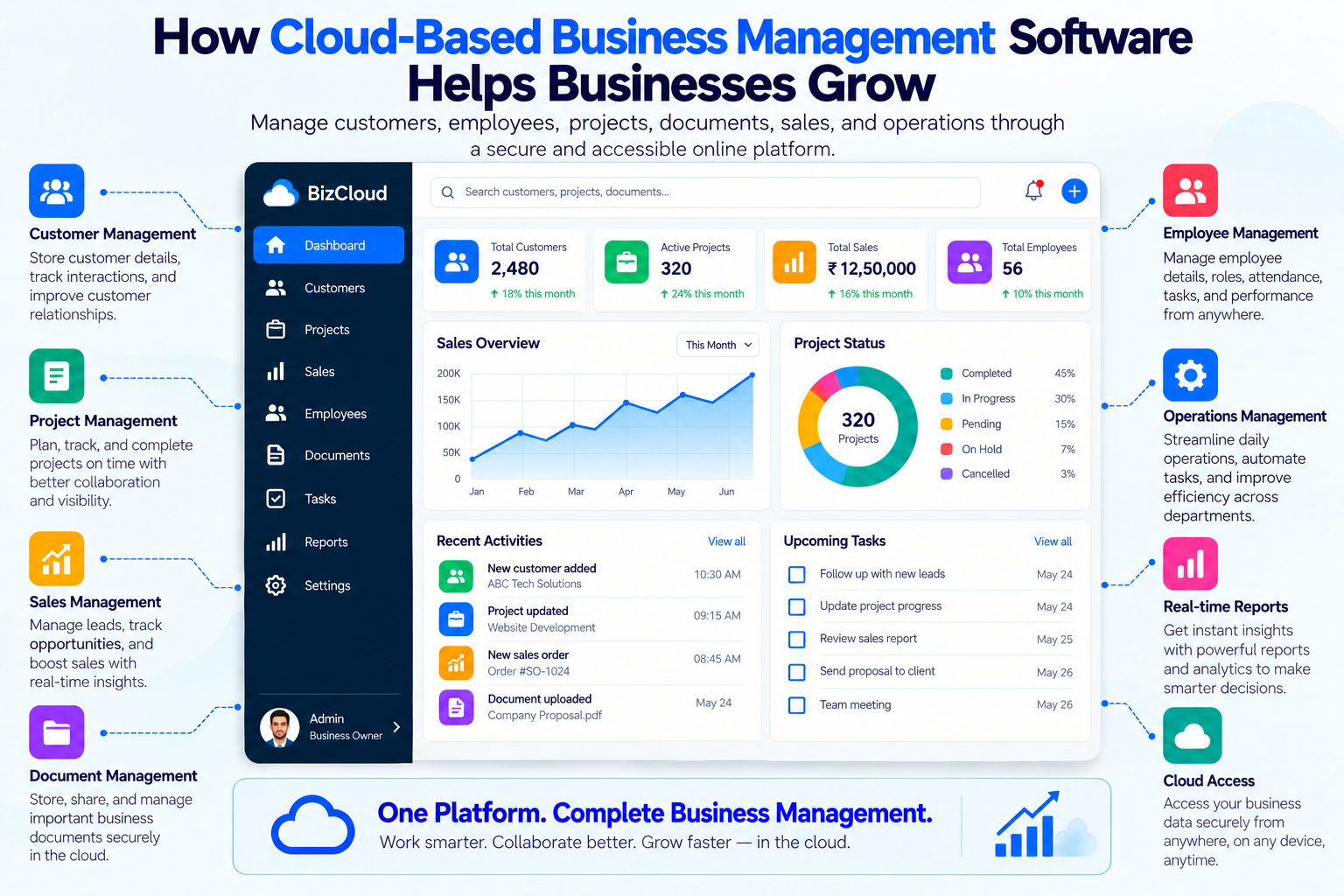
Businesses increasingly depend on digital systems to manage their daily activities. Traditional software installed on individual computers can make information difficult to access across different locations and teams. Cloud-Based Business Management Software provides an online platform where business information and processes can be managed from a centralized environment.
Centralized Business Information
Cloud-based systems allow businesses to organize important information in one digital platform. Customer records, project details, employee information, sales data, documents, and operational records can be managed from a centralized system. This helps reduce dependence on separate files and disconnected applications.
Accessing Business Operations Remotely
One of the major benefits of cloud-based software is accessibility. Authorized users can access business information and applications through an internet-connected device. This can be particularly useful for businesses with remote employees, multiple branches, or teams working from different locations.
Improving Team Collaboration
Business teams often need to share information and coordinate tasks. Cloud-based management software allows authorized employees to work with shared information and access updated records. This can improve collaboration between departments and reduce communication gaps.
Simplifying Document Management
Businesses handle contracts, reports, invoices, proposals, customer documents, and internal files regularly. Cloud-based document management can organize these files digitally and make them easier for authorized users to access. It also reduces the dependence on physical documents and local computer storage.
Supporting Business Process Automation
Cloud platforms can support automated workflows for activities such as notifications, approvals, task assignments, reporting, customer follow-ups, and data updates. Automating repetitive processes can reduce administrative work and help employees focus on more important business activities.
Improving Data Management
Businesses generate large amounts of data through sales, customers, projects, employees, and financial activities. Cloud-based systems can help organizations collect and organize this information in a centralized environment. Structured data management can make business information easier to access and analyze.
Business Reporting and Analytics
Managers need accurate information to understand business performance. Cloud-based management platforms can provide reports related to sales, customers, projects, employees, expenses, and other operational activities. These reports can help organizations monitor performance and support better decision-making.
Security and Access Control
Business information stored in cloud systems needs appropriate security measures. A well-designed platform can use authentication, role-based permissions, encryption, backups, and activity monitoring to help protect important information. Access controls can also ensure that employees only access information relevant to their responsibilities.
Scalability for Growing Businesses
As organizations grow, their requirements for users, storage, projects, customers, and business processes also increase. Cloud-based software can provide a scalable environment that can adapt to changing business requirements without depending entirely on local infrastructure.
Reducing IT Infrastructure Requirements
Traditional business software may require local servers, installations, and regular hardware maintenance. Cloud-based solutions can reduce some of these infrastructure requirements by hosting applications and data through cloud environments. This can make digital management more convenient for organizations.
Customized Cloud-Based Business Solutions
Every business has different operational requirements. Custom cloud-based software can be developed with features such as customer management, project management, sales tracking, employee management, document management, reporting, workflow automation, and other business-specific functions.
Conclusion
Cloud-Based Business Management Software provides organizations with a centralized and flexible approach to managing modern business operations. By supporting remote access, collaboration, automation, data management, reporting, and scalability, cloud-based solutions can help businesses create more connected and efficient workflows. As digital transformation continues, cloud-based business platforms can provide a strong foundation for organizations looking to modernize their operations.