The Science of Waiting: How Businesses Can Turn Customer Wait Time Into Customer Satisfaction
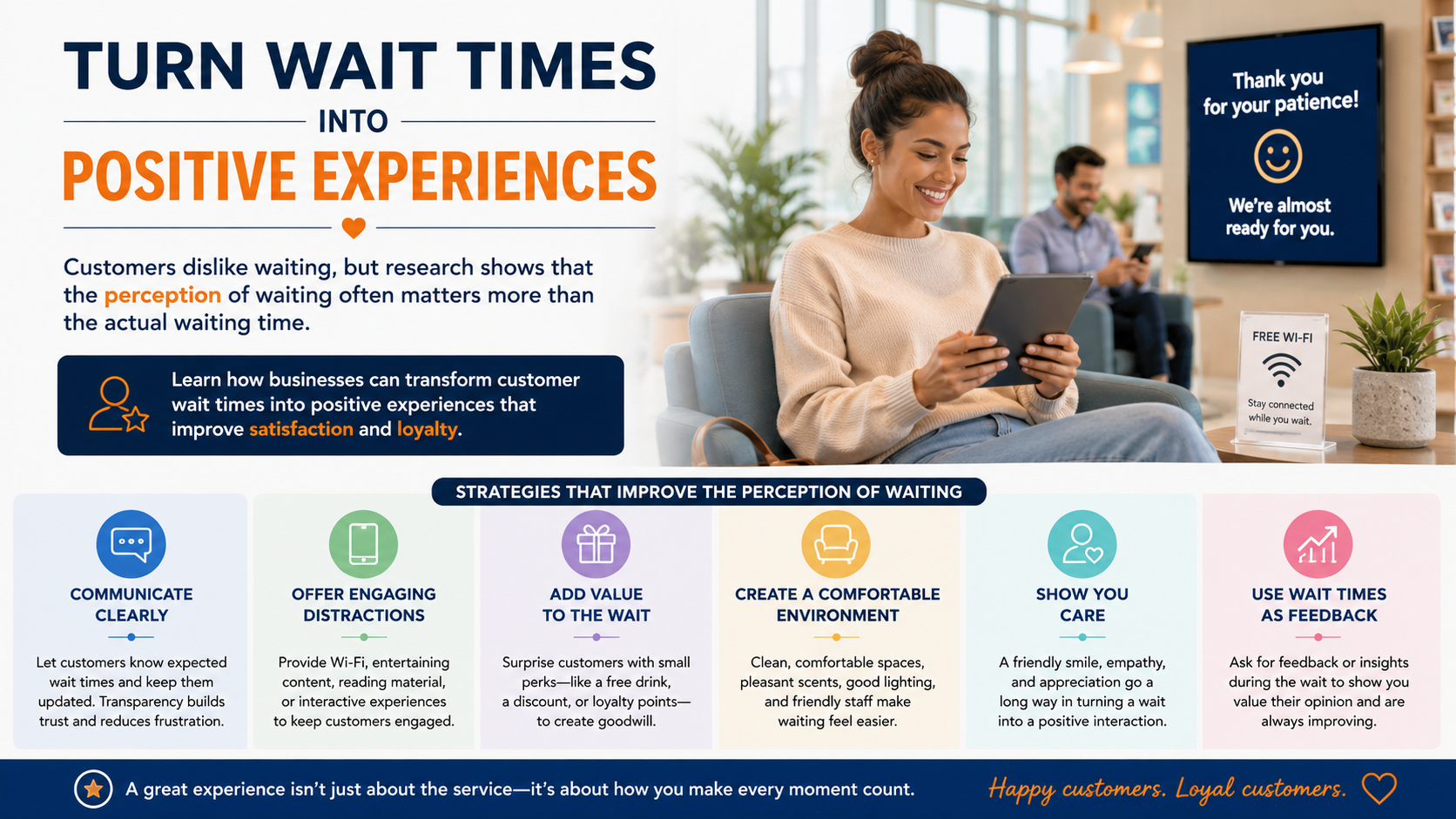
No customer enjoys waiting. Whether standing in a queue, waiting for a response, or anticipating a service, delays can create frustration and negatively affect the overall experience. Surprisingly, studies in customer behavior reveal that people often judge their experience based on how they felt during the wait rather than the exact amount of time spent waiting.
This means businesses have an opportunity to transform waiting from a source of frustration into an experience that strengthens customer relationships.
Why Waiting Feels Longer Than It Actually Is
Human psychology plays a significant role in how people perceive time. Unoccupied waiting often feels longer than occupied waiting. When customers have nothing to do, even a short delay can seem much longer than it really is.
Businesses that keep customers informed and engaged during wait periods can significantly improve satisfaction levels without necessarily reducing actual wait times.
Uncertainty Creates Frustration
One of the biggest reasons customers become irritated is uncertainty. When people don't know how long they will have to wait, anxiety and dissatisfaction increase.
Providing estimated wait times, progress updates, or status notifications helps customers feel more in control and reduces frustration.
Communication Is More Powerful Than Speed
Many businesses focus entirely on reducing wait times. While speed is important, communication often has an even greater impact on customer satisfaction.
Customers are generally more understanding when they receive timely updates about delays, service progress, or expected completion times.
Technology Is Changing Customer Expectations
Modern consumers have become accustomed to real-time information. They can track deliveries, monitor ride-sharing vehicles, and receive instant notifications about appointments.
As a result, customers increasingly expect similar visibility and transparency from every business they interact with.
The Emotional Impact of Customer Experience
Customers remember how a business made them feel. A positive waiting experience can improve overall brand perception, while a frustrating wait can overshadow an otherwise excellent product or service.
Businesses that focus on customer emotions often outperform competitors that focus solely on operational metrics.
Turning Waiting Into Engagement
Forward-thinking organizations use waiting periods as opportunities to engage customers. Educational content, personalized recommendations, helpful information, or service updates can make waiting feel more productive and enjoyable.
Engaged customers perceive wait times differently and often report higher satisfaction levels.
Building Trust Through Transparency
Transparency creates confidence. When businesses openly communicate timelines, service progress, and potential delays, customers are more likely to remain patient and understanding.
Trust is built not by avoiding problems entirely but by communicating effectively when challenges arise.
Customer Experience Is the New Competitive Advantage
In many industries, products and services have become increasingly similar. Customer experience has emerged as one of the most important factors influencing purchasing decisions.
Businesses that create positive interactions at every stage of the customer journey gain stronger loyalty and long-term competitive advantages.
The Future of Customer Service
As technology continues to evolve, businesses will gain new opportunities to improve customer experiences through automation, real-time updates, and personalized communication.
The organizations that succeed will be those that understand an important truth: customers may forget how long they waited, but they will always remember how the waiting experience made them feel.