HR Management Software: A Complete Guide for Modern Businesses
Employees are one of the most important parts of any organization, but managing employee information and daily HR activities can become complicated as a company grows. Recruitment, attendance, leave management, payroll, employee records, performance tracking, and internal communication all require accurate information and organized processes.
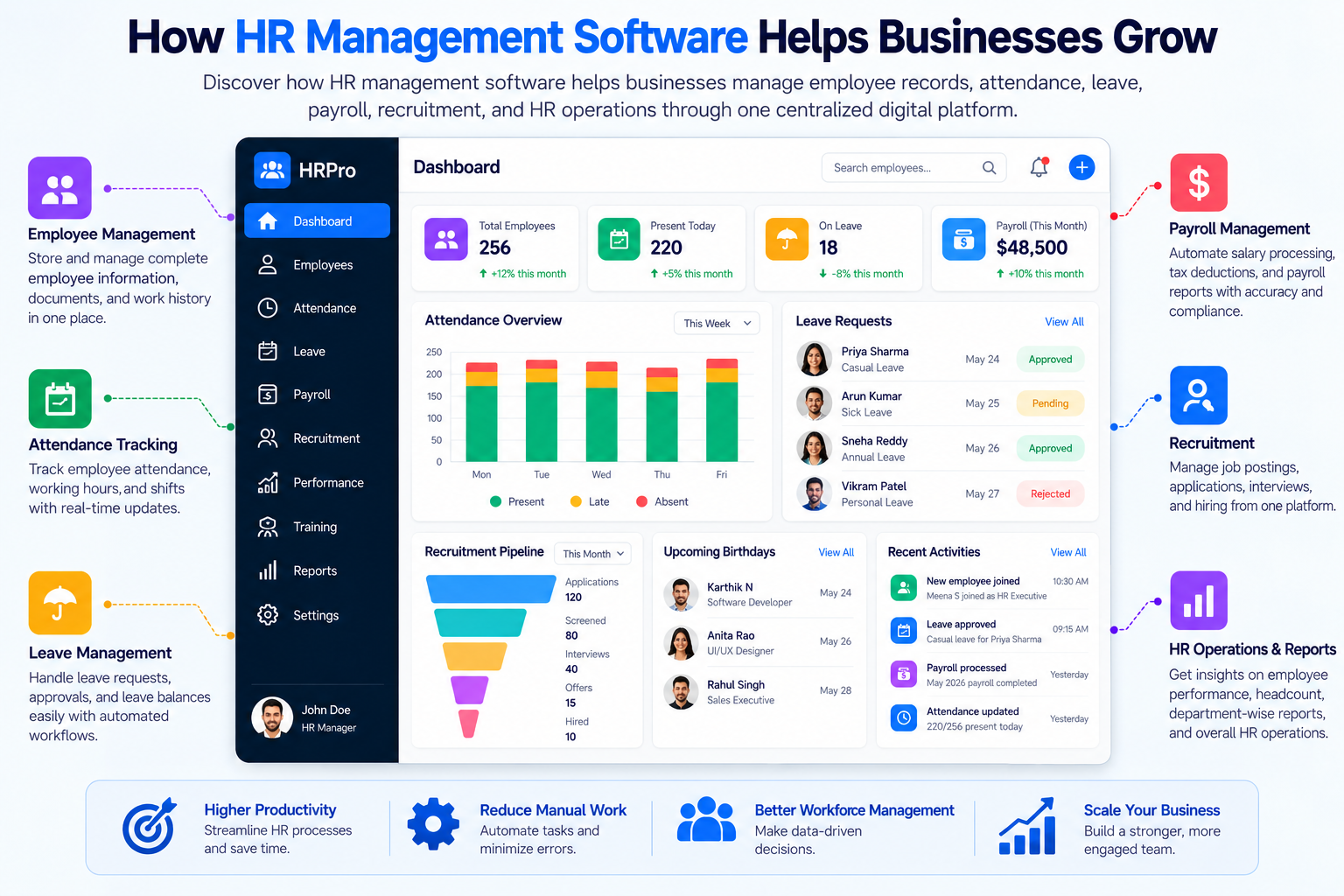
HR Management Software provides businesses with a centralized digital platform for managing these activities. Instead of maintaining employee information through spreadsheets, paper files, and separate applications, organizations can use a connected system to simplify HR operations and reduce repetitive administrative work.
The Challenges of Traditional HR Management
Many organizations still depend on manual processes for maintaining employee records, tracking attendance, processing leave requests, and preparing HR reports. These processes can consume significant time and may result in duplicate or outdated information.
As the workforce increases, manually managing employee information becomes more difficult. A centralized HR management system can provide a structured way to organize these activities.
Centralized Employee Records
HR departments manage a wide range of employee information, including contact details, joining information, department, designation, documents, and employment history.
HR software can store this information in a centralized digital database. Authorized HR personnel can access relevant records when required, reducing the need to search through physical files or multiple spreadsheets.
Attendance Management
Tracking employee attendance manually can be time-consuming, particularly for organizations with a large workforce or multiple locations.
HR management software can connect attendance information with employee records and provide managers with a clearer view of attendance patterns. Depending on the system, businesses can integrate attendance devices or other digital attendance solutions.
Leave Management
Managing leave requests through emails, paper forms, or messages can make it difficult for HR teams to maintain accurate records.
A digital leave management system can allow employees to submit requests while managers review and approve them through a centralized workflow. Approved leave information can then be maintained as part of the employee's HR record.
Payroll Management
Payroll requires accurate employee information, attendance data, leave records, salary details, and other applicable components.
HR software can help organize payroll-related information and reduce repetitive calculations and data entry. Integrating payroll with attendance and employee records can create a more connected workflow.
Recruitment Management
Recruitment involves multiple stages, including job postings, candidate applications, screening, interviews, selection, and onboarding.
HR management systems can help organizations organize candidate information and monitor recruitment progress. This allows HR teams to maintain a structured hiring process and reduce the need to manage candidate information across separate files.
Employee Performance Management
Organizations need to monitor employee goals, responsibilities, feedback, and performance over time.
Digital performance management tools can help HR teams and managers organize performance-related information. This can provide a structured way to conduct reviews and maintain records of employee development activities.
Employee Self-Service
Modern HR systems can provide employee self-service features that allow staff to access selected information without depending entirely on HR personnel.
Depending on the platform, employees may be able to view attendance information, submit leave requests, access documents, or update certain personal information. This can reduce routine administrative requests handled by HR teams.
HR Reports and Analytics
HR departments need accurate information to understand workforce-related activities. Reports can provide information about attendance, leave, employee distribution, recruitment, and other HR operations.
Centralized reports help management teams access organized information and support workforce planning.
Improving HR Automation
Many HR activities involve repetitive administrative tasks. Automating selected workflows can reduce manual effort and improve consistency.
For example, systems can automate notifications, approval workflows, attendance calculations, document management, and other routine activities depending on the organization's requirements.
Data Security in HR Systems
Employee information can contain sensitive business and personal data. Protecting this information is an important responsibility for organizations.
HR management software should provide appropriate access controls so that employees can access only the information relevant to their roles. Security features such as authentication, permissions, backups, and activity tracking can help organizations protect HR data.
Customized HR Management Solutions
Different organizations have different HR policies and workflows. A small company may need basic employee and leave management, while a larger organization may require recruitment, payroll, attendance, performance management, and multi-location support.
Customized HR software can be designed around an organization's specific requirements. This allows businesses to integrate HR processes with existing business management, ERP, payroll, or accounting systems.
Choosing the Right HR Software
Before selecting an HR management solution, businesses should understand their current HR processes and future requirements. Important factors include ease of use, scalability, security, customization, reporting, integration capabilities, employee self-service, and technical support.
The right system should simplify HR operations without creating unnecessary complexity for employees or administrators.
Conclusion
HR Management Software helps organizations move employee management from manual processes toward organized digital workflows. From employee records and attendance to leave, recruitment, payroll, performance management, and reporting, a centralized HR platform can simplify many everyday HR activities.
As businesses continue to grow and adopt digital technologies, scalable HR solutions can provide an important foundation for managing employees efficiently. With the right software and implementation approach, organizations can reduce administrative workload, improve information management, and create more connected HR operations.