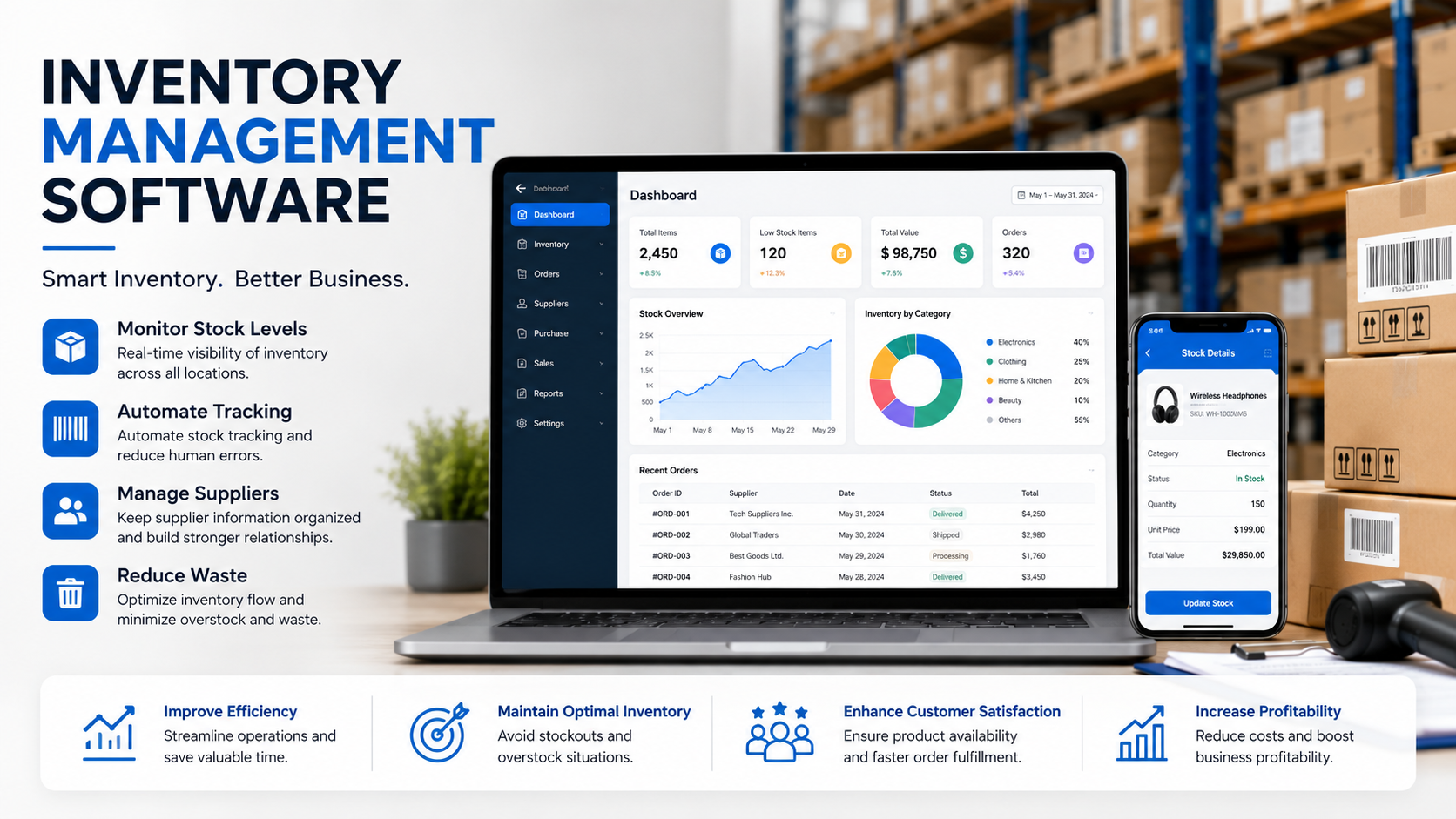
How Inventory Management Software Helps Businesses Reduce Costs and Improve Efficiency
Introduction
Inventory is one of the most valuable assets for businesses involved in manufacturing, wholesale distribution, retail, healthcare, e-commerce, and warehousing. Efficient inventory management ensures that products are available when customers need them while minimizing storage costs and reducing unnecessary stock accumulation. However, relying on manual inventory records often leads to stock discrepancies, delayed replenishment, human errors, and financial losses. Inventory Management Software provides businesses with a centralized digital platform that automates stock tracking, purchase management, supplier coordination, reporting, and inventory forecasting. By implementing a modern inventory management solution, organizations can improve productivity, reduce operating costs, and make better business decisions.
Real-Time Inventory Tracking
One of the biggest advantages of Inventory Management Software is its ability to provide real-time visibility into stock levels. Every purchase, sale, return, or stock transfer is automatically recorded, allowing business owners to know exactly how much inventory is available at any given moment. This eliminates the need for manual stock counting and reduces errors caused by outdated records. Real-time tracking also helps businesses respond quickly to changing customer demand while ensuring accurate inventory information across multiple warehouses or store locations.
Preventing Stock Shortages and Overstocking
Maintaining the right inventory balance is critical for business success. Running out of stock can lead to missed sales opportunities and dissatisfied customers, while excess inventory increases storage costs and ties up valuable capital. Inventory Management Software continuously monitors stock levels and automatically generates low-stock alerts when products need replenishment. It also provides demand forecasting based on historical sales data, enabling businesses to purchase inventory more efficiently. This balanced approach helps organizations reduce waste, optimize storage space, and improve cash flow.
Streamlining Purchase and Supplier Management
Managing suppliers manually can become difficult as businesses grow and purchase products from multiple vendors. Inventory Management Software stores supplier information, purchase history, pricing agreements, and delivery schedules in a centralized database. Businesses can generate purchase orders automatically, monitor supplier performance, and track incoming shipments in real time. Improved supplier management leads to better procurement decisions, timely deliveries, and stronger business relationships while reducing administrative workload.
Improving Warehouse Efficiency
Warehouse operations involve receiving goods, storing products, picking orders, packing shipments, and managing stock transfers. Manual warehouse management often results in misplaced inventory, delayed order fulfillment, and reduced productivity. Inventory Management Software organizes warehouse locations, tracks product movements, and simplifies order processing through barcode or QR code integration. Employees can locate products quickly, process orders accurately, and reduce fulfillment time, resulting in faster deliveries and improved customer satisfaction.
Enhancing Sales and Customer Satisfaction
Customer satisfaction depends heavily on product availability and timely order fulfillment. Inventory Management Software integrates with sales systems to ensure that inventory data remains accurate across all sales channels. Customers receive reliable product availability information, reducing the likelihood of canceled orders due to stock shortages. Faster order processing and accurate inventory updates improve customer trust, encourage repeat purchases, and strengthen brand reputation.
Generating Business Insights Through Analytics
Modern businesses rely on accurate data to make informed decisions. Inventory Management Software provides comprehensive reports covering stock movement, inventory turnover, supplier performance, sales trends, purchase history, and product profitability. These analytics help business owners identify slow-moving products, optimize purchasing strategies, improve pricing decisions, and forecast future demand. Data-driven inventory management supports continuous improvement while increasing overall business profitability.
Supporting Business Growth
As businesses expand, managing larger inventories across multiple locations becomes increasingly challenging. Inventory Management Software offers scalable solutions that support warehouses, retail branches, distribution centers, and e-commerce operations from a single centralized platform. Cloud-based access allows managers to monitor inventory remotely while maintaining complete control over stock movements, purchasing, and reporting. This flexibility enables businesses to grow confidently without losing operational efficiency.
Conclusion
Inventory Management Software has become an essential business solution for organizations seeking greater efficiency, improved inventory control, and reduced operating costs. By automating stock tracking, supplier management, warehouse operations, purchasing, and reporting, businesses can minimize errors while improving customer satisfaction and profitability. Investing in a reliable inventory management system helps organizations maintain optimal stock levels, make smarter business decisions, and build a strong foundation for sustainable long-term growth.