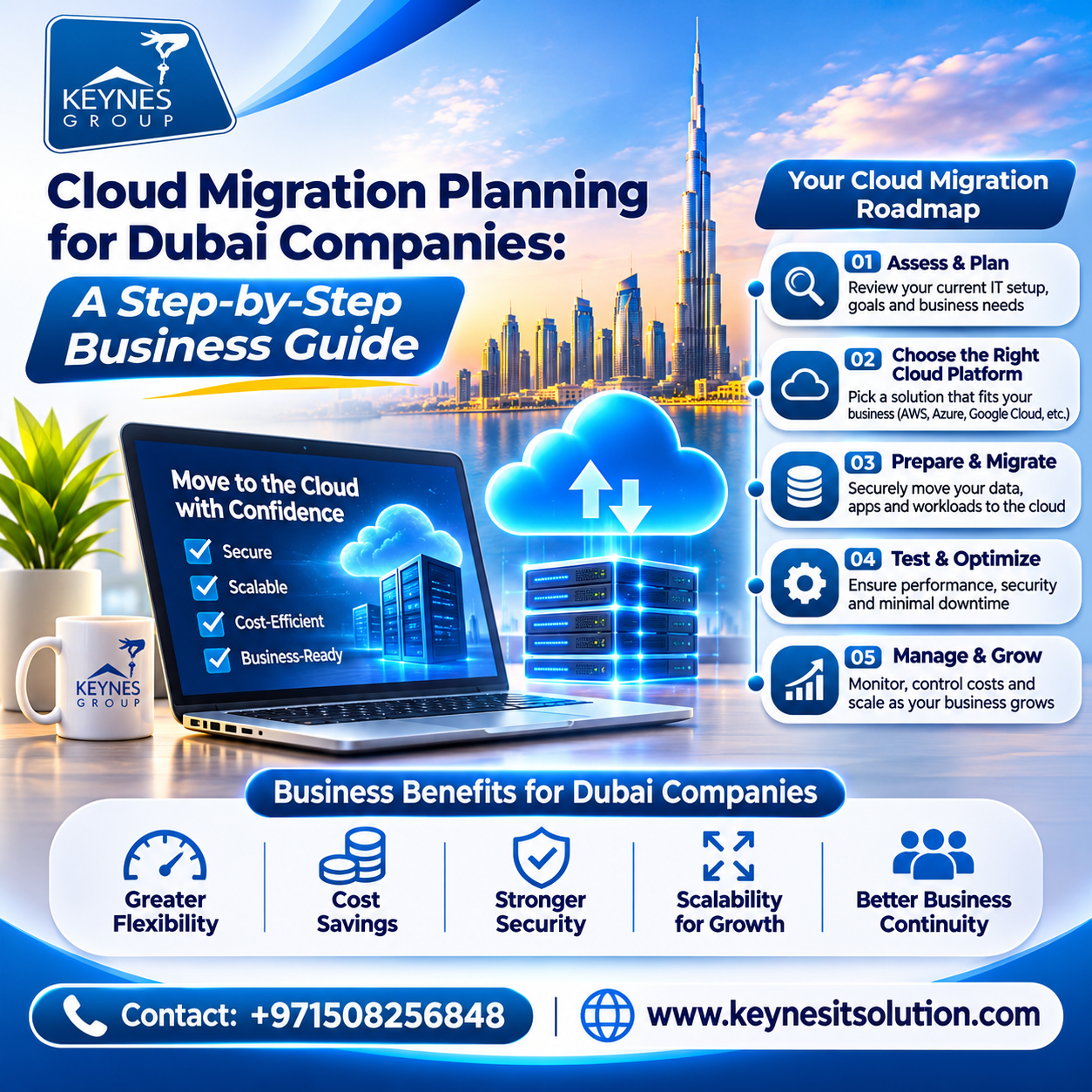
Cloud Migration Planning for Dubai Companies: A Step-by-Step Business Guide
Moving business systems to cloud infrastructure can change how applications are accessed, maintained and scaled. However, cloud migration is not simply copying files to a new location. Companies in Dubai should first understand their applications, data, dependencies, security responsibilities and ongoing operating costs. A structured plan helps reduce disruption and makes it easier to decide which workloads should move, which should be improved first and which may be better left where they are for now.
Create an inventory of applications and data
List applications, databases, file stores, integrations and infrastructure components used by each department. Record the business owner, technical owner, data sensitivity, user groups, dependencies and service criticality. Identify systems that are no longer used or contain duplicate information before planning a move. Map how applications communicate so that hidden dependencies are not overlooked.
Assess cloud readiness and choose a migration approach
Evaluate whether each workload is suitable for migration, modernisation, replacement or retirement. Some applications may move with limited changes, while others may need redesign or a different hosting model. Consider performance, licensing, operating system support, integration requirements and the skills available to maintain the system. The right architecture depends on business requirements, security, latency and cost.
Estimate costs beyond the headline subscription
Include compute, storage, network transfer, backup, monitoring, support, security services, licences and staff time. Consider costs during migration as well as ongoing operations. Set budgets and alerts where supported, and identify who reviews usage and approves changes. Review oversized resources, unused environments and forgotten test systems regularly.
Plan identity, security and data protection
Define identity management, administrator roles, multi-factor authentication, network access, encryption, logging, backup and recovery requirements. Apply least-privilege access and keep administrative accounts separate from routine user accounts where practical. Understand where data will be stored and processed, which third parties may access it and what contractual or legal requirements apply.
Prepare a migration and rollback plan
Choose a low-risk workload for an initial pilot. Document migration steps, data transfer method, validation checks, downtime expectations, communication plan and rollback conditions. Test data integrity, user access, application performance and integrations before declaring migration complete. Make sure stakeholders know who can approve the cutover and who will decide whether to reverse it.
Train teams and update operating procedures
Migration changes how users access applications and how administrators monitor, patch and support them. Provide training for employees and technical staff. Update documentation for onboarding, permissions, incident reporting, backup restoration and supplier escalation. Clarify the shared responsibility model for the selected cloud services.
Monitor performance and optimise after migration
Track application availability, response time, error rates, storage growth, backup success and resource consumption. Compare results with the agreed baseline and ask users whether the new environment supports their work. Schedule regular reviews of access, security configuration, resource usage and recovery readiness.
Document the handover and support responsibilities
Ask the implementation team to provide an architecture overview, inventory, configuration records, access handover, backup and recovery procedures, monitoring setup and known limitations. Clarify ownership of accounts and subscriptions before work begins. Evaluate providers on their ability to explain risks, test plans and support responsibilities—not only on migration speed.
Conclusion
Cloud migration is a business and technology change that should be planned around application dependencies, data protection, cost, user readiness and recovery. Dubai companies should assess workloads individually, run a controlled pilot and measure the result before expanding the programme. Explore Keynes IT Solutions for information about software and IT services. For general local context, use the official Dubai government portal.
Frequently Asked Questions
Should every business application be moved to the cloud?
No. Some applications may be better modernised, replaced, retained temporarily or hosted in another environment. Decide based on business value, security, performance, cost and technical dependencies.
How long does cloud migration take?
The schedule depends on the number and complexity of workloads, data volume, integrations, testing and downtime requirements. An inventory and pilot provide a more realistic estimate.
Does cloud hosting automatically make data secure?
No. Security depends on service configuration, identity controls, access permissions, encryption, monitoring, backup and the responsibilities shared between the provider and customer.
Further Reading
Discuss your requirements: Visit Keynes IT Solutions.